
IRISH MANOR HOUSE: History of Coopershill
1750s
In the early 1750s, Arthur & Sarah decided that they would build on the bare hill nearby, across the river. The story is told that they engaged an architect & a builder, placed two buckets of gold sovereigns on the ground and instructed them to build a grand manor house on the hill. However, they had not reckoned with the building of the bridge across the river; every time the foundation stones were laid by the river bed, the giant stones would sink into the soft mud. The solution found was to place layers of fresh sheepskins under each stone, which would prevent them sinking. To this day the skins remain and the bridge is solid, which is a good thing for all of us! However, it is said that the skins must remain moist, or they will dry out and rot and the bridge subside. A good side of all the rain we get in Ireland is that there seems little chance of the river drying up. So, after the drama of the bridge, the best part of a bucket of the sovereigns had been spent.
The Building
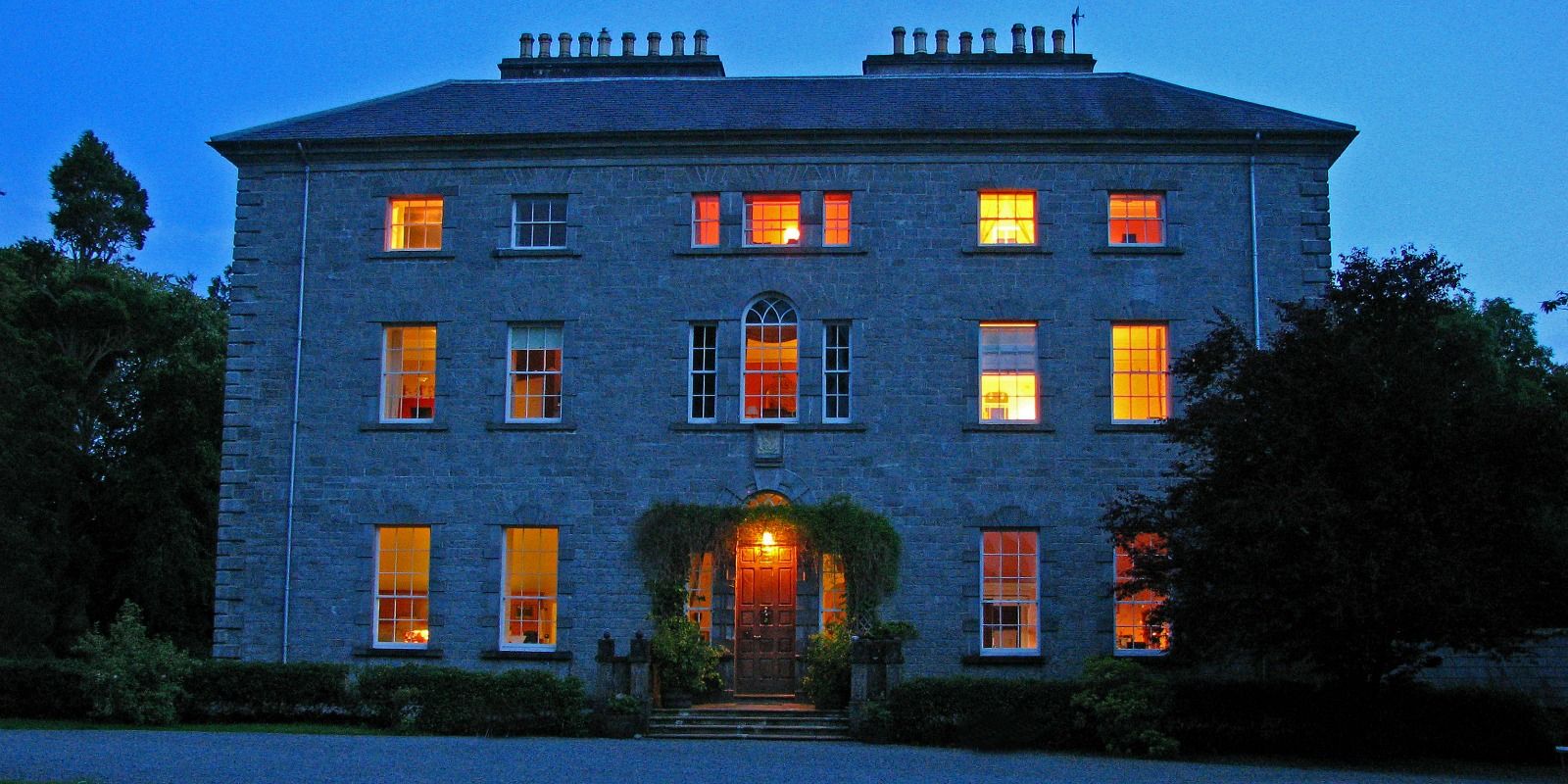
The building of the house started in 1755, under the supervision of one of the best known architects of the time, Francis Bindon, of Ennis in County Clare. We often wonder at the task that was given to Mr. Bindon. He lived close to where Shannon Airport is now, and a round trip to see the progress of the building of Coopershill would have taken him a full week. The poor man was eventually killed in coach crash – hopefully he was not on his way to or from Sligo at the time.
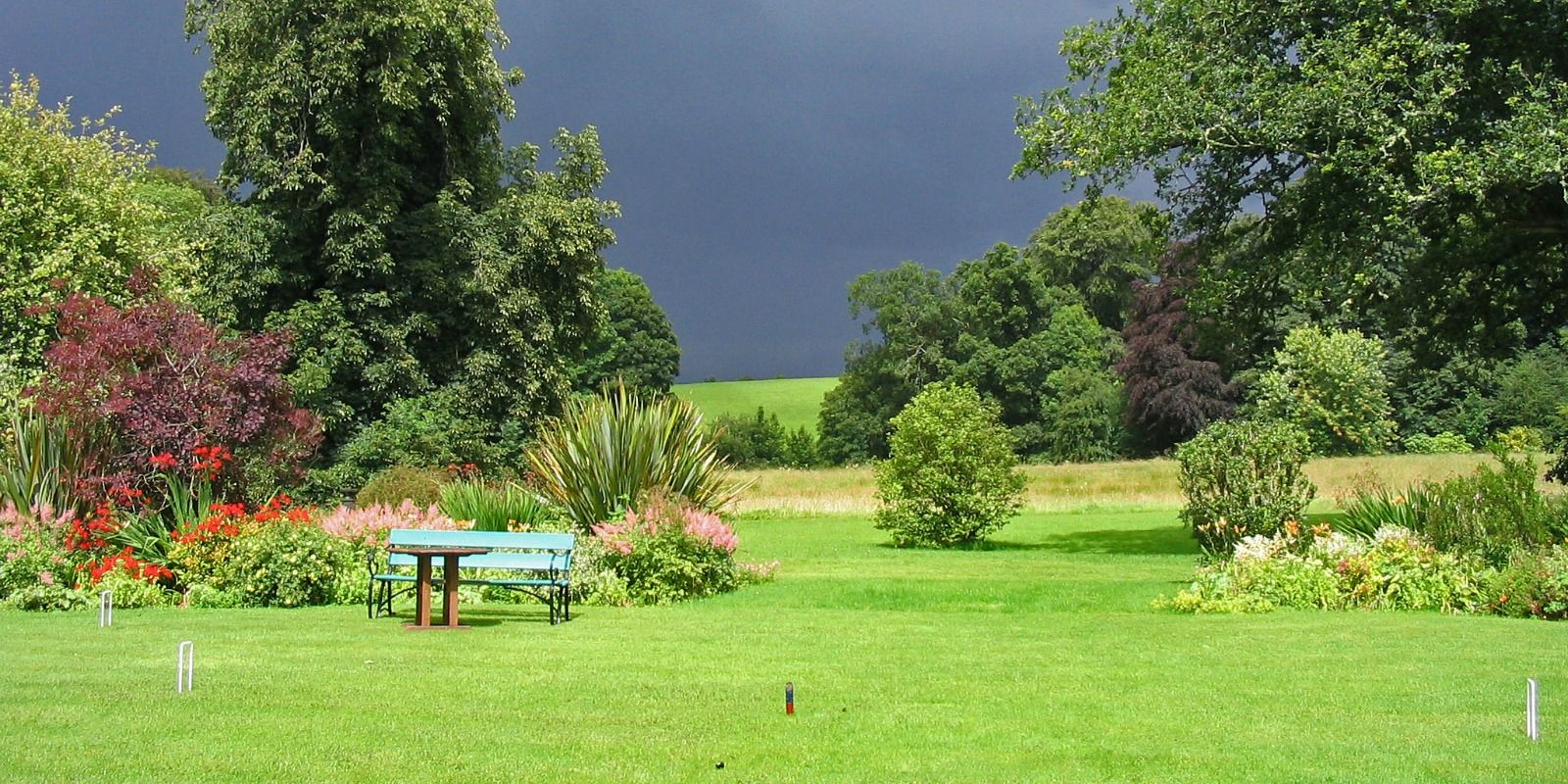
Experts can now look at the house and tell us that the builder changed somewhere near the top floor, so all did not go smoothly. The limestone blocks, from which the outer stones were cut, were dragged by mules from a quarry 5 miles away; there still remains a wood on the estate named "the Mule Park", where the mules were stabled. The stones were shaped by masons working at the front of the house, and the chippings lie just 2 feet below the surface of the lawn, surprisingly thwarting, rather than aiding, good drainage.
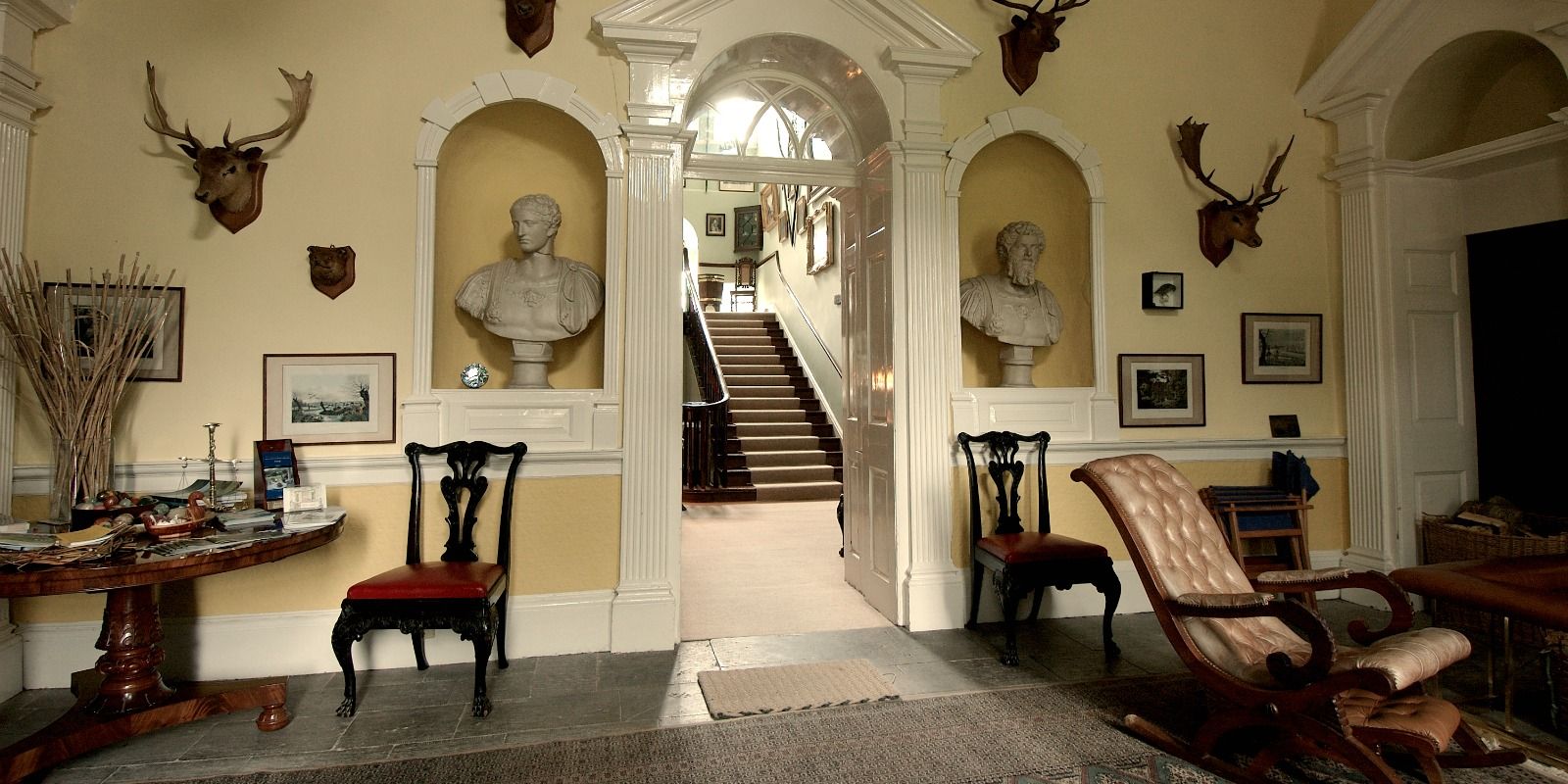
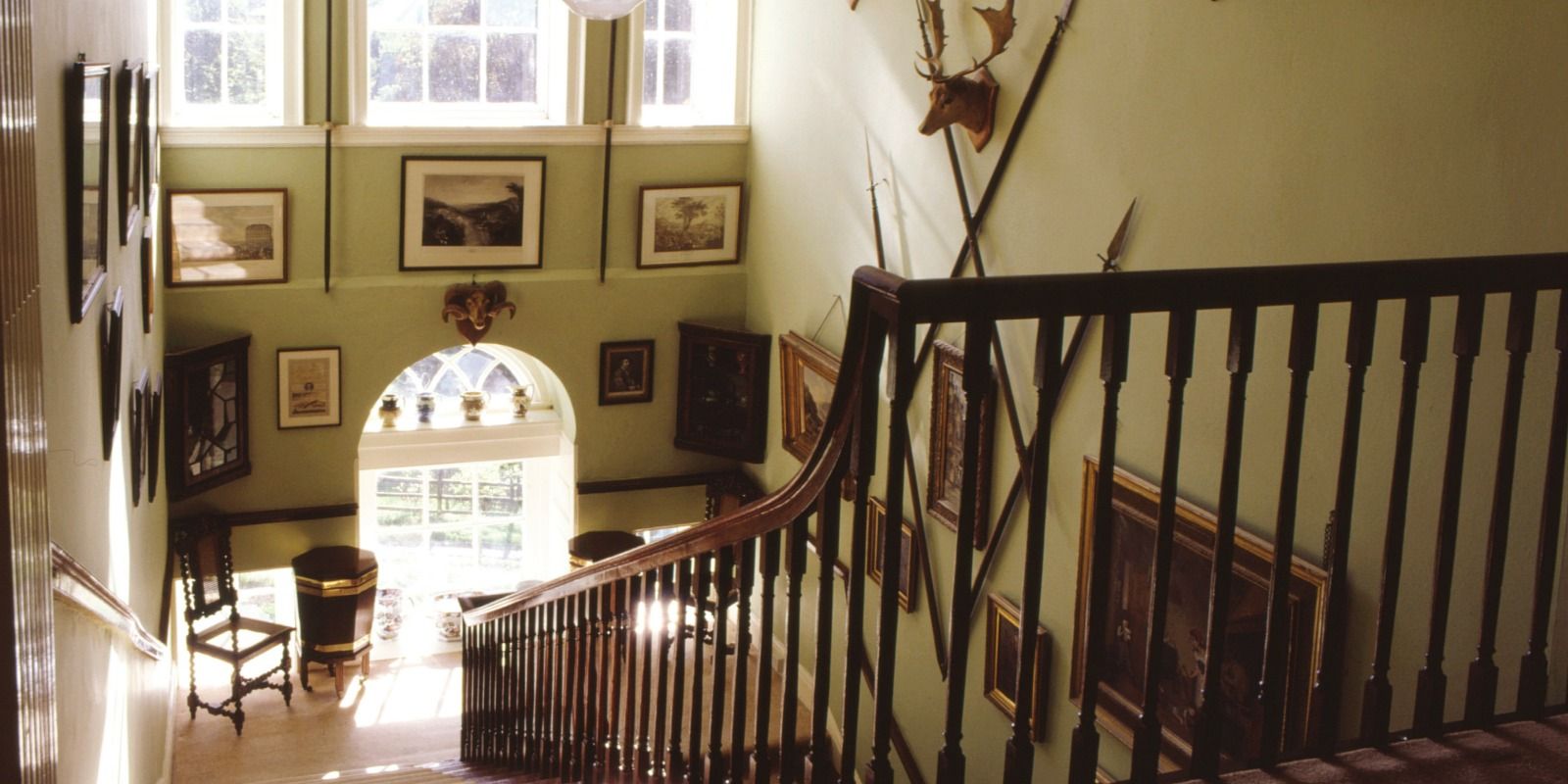
It is clear by the positioning of the main staircase that the owners could not decide whether the entrance to the solid square shaped Georgian house should be through the north or south facing walls. They appear to have left the decision till the last possible moment, no doubt adding to the problems of the architect & the builder. The mansion took 19 years to build and was finally completed in 1774. The store of sovereigns must have been exhausted by this time, because there is evidence that much of the interior of the house was completed later; the design of the door casings, for example, was to be found only in London in the 1770s, so these will have been added at a later date.
Occupants
Coopershill was first occupied by Arthur & Sarah's son, Arthur Brooke Cooper, who married a lady from a nearby ancient Irish family, Jane Francis O'Hara. The next owner of the house was Arthur Brooke & Jane's second son, Charles William Cooper. At this time, the head of the O'Hara family at nearby Annaghmore was Charles King O'Hara, a bachelor. Wishing to perpetuate the name of his family, Charles King offered to leave in his will the vast estates and of Annaghmore to his nephew, Charles William Cooper, provided that the latter would change his name to O'Hara, his mother's maiden name. This he did by Royal Warrant in 1860 and moved with his wife Annie to Annaghmore. He retained ownership of Coopershill, and left his two spinster sisters to continue living there. Charles William & Annie had 14 children, 5 of whom died before reaching the age of 28.
Annaghmore was inherited by Charles William & Annie's eldest son Charles,and Coopershill by their second son Arthur. Arthur died in 1934 and Charles in 1947. Both were bachelors and they left their properties to Freddie. Although Freddie was 12th to be born and not the next in line, he had married Muriel Henn from County Clare, and they already had sons to eventually inherit both properties. This was considered very important at the time and so Annaghmore was subsequently inherited by Freddie & Muriel's eldest son Donal, and Coopershill by their second son Frank. Frank had married an English woman, Joan Bridgman, during his career of tea planting in India. After Freddie's death in 1947, Frank & Joan moved to Coopershill to start a new life in agriculture, quite a challenge at the time of farm mechanization of the early 1950s.
After Frank & Joan's family of 6 had grown up, they created a new source of modest income from taking in families for holidays in the summer months. A big attraction were the ponies in the stables at that time, and some families came year after year for the childrens' riding. Frank died in 1982, and Joan continued for another 4 years on her own, joining a growing group of owners of large manor houses from all over Ireland who could only keep their houses in shape with the aid of income generated by taking paying guests. Joan died in 2008 at home in Coopershill after 95 years of remarkable energy and boundless cheerfulness.
Brian (Frank and Joan's oldest son) & Lindy, came to take over the Coopershill in early 1987, adding 3 more guest bedrooms to the original 5 and investing much love, attention and funds in the renovation and care of the mansion until their retirement in 2007. Their 2nd son, Simon, with his wife Christina, are the latest custodians of Coopershill and are the 7th generation.
Simon's 2nd cousin, Durcan O'Hara, now lives at Annaghmore, just 8 miles from Coopershill.